Another Voice (1999) 另一种声音
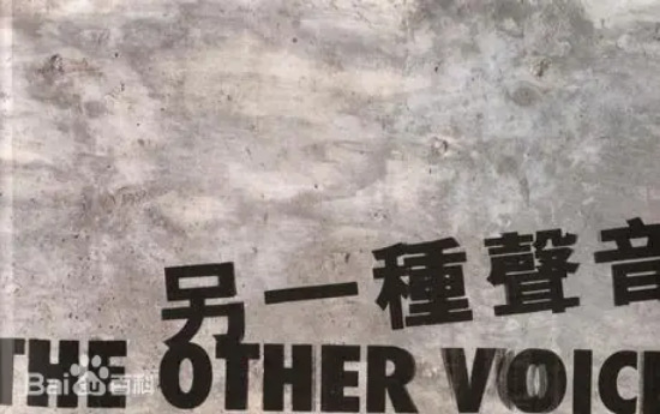
Author: Li Feng 李冯
Publisher: Lijiang Publishing House
Format: Webnovel
Genre: Short Story
Date: 1999
Pages: 254 pages
Book Series: Guangxi Contemporary Writers Series: Li Feng Volume
ISBN: 7540728671
Language: Chinese
Adaptation: Modern
Summary:
In *Another Voice*, Sun Wukong is no longer the peerless hero and embodiment of wisdom and valor found in the classical original. Instead, he appears as an idler—prone to drowsiness and lethargy, aimlessly wandering about, and deeply susceptible to material desires—who frequently possesses the ability to shapeshift *into* something else, yet struggles to shift *back* to his original form.
The work opens by subverting traditional narrative conventions, adopting a tongue-in-cheek tone to state: "That legendary pilgrimage—destined to be celebrated for eternity—was nothing like the grandiose spectacle later trumpeted by storytellers. Along the way, the biggest problems were merely calf cramps and hunger." During the journey to retrieve the scriptures, the four master-and-disciple travelers become mired in ceaseless internal strife—a far cry from the heroic saga of enduring tribulations to achieve enlightenment depicted in Journey to the West. The character of Sun Wukong is thoroughly deconstructed: due to his rusty magical skills, he successively finds himself transformed into a bandit chieftain's "lady of the manor," a renowned courtesan named He Cuihua, and even the maidservant of Journey to the West author Wu Cheng'en. During his long odyssey, he traverses time and space, stepping into a modern metropolis in the guise of an ordinary man in casual attire, thereby completing his fall from mythical hero to mortal. Ultimately, through a journey of self-discovery, he recovers his memories and true essence, yet chooses to continue living as an ordinary human being.
If referring to Another Voice: Interviews with Overseas Sinologists (另一种声音:海外汉学访谈录), edited by Ji Jin, the work possesses no single narrative plot; its core content is as follows:
This volume collects in-depth interviews with 16 prominent international Sinologists—including Stephen Owen, C.T. Hsia, and David Der-wei Wang—focusing on topics such as the study of modern and contemporary Chinese literature, translation practices, and cultural dissemination. Through a format that interweaves academic inquiry with casual conversation, the book showcases the diverse interpretations of Chinese literature offered by overseas scholars, covering themes such as the lyrical tradition, the humanistic crisis of globalization, and the concept of a "Sinophone literary community." For instance, Stephen Owen broke away from traditional periodization frameworks during the compilation of The Cambridge History of Chinese Literature; C.T. Hsia offered fresh re-evaluations of the literary significance of writers such as Eileen Chang and Shen Congwen; and Ronald Egan dedicated himself to the translation and scholarly analysis of the works of Qian Zhongshu. These interviews provide vivid, firsthand material for examining the global dissemination of Chinese literature and for contemplating strategies regarding the export of Chinese culture.
Source: https://baike.baidu.com/item/%E5%8F%A6%E4%B8%80%E7%A7%8D%E5%A3%B0%E9%9F%B3/12419976
