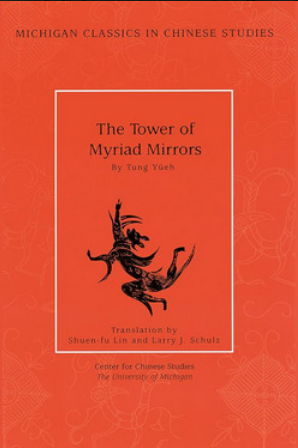
A Supplement to the Journey to the West (1641) 西遊補
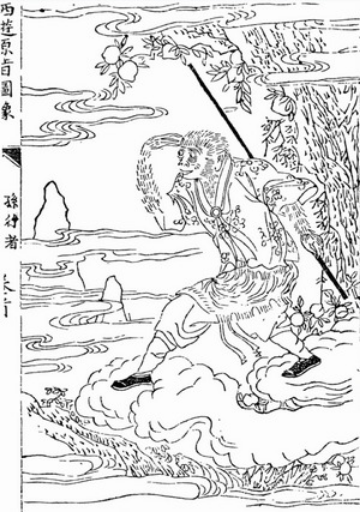
Author: Dong Yue (Tung Yüeh)
Format: Paperback
Genre: Fantasy / Adventure
Date: 1641
Pages: 200 pages
Number of issues: 1
Language: Chinese
Adaptation: Addition
Summary:
In the story, the Monkey King is trapped in a dream world by the Qing Fish demon, an embodiment of desire, who wishes to eat his master, the Tang Sanzang. He wanders from one adventure to the next, using a magic tower of mirrors and a jade doorway to travel to different points in time. In the Qin dynasty, he disguises himself as Consort Yu (Xiang Yu's wife) in order to locate a magic weapon needed for his quest to India. During the Song dynasty, he serves in place of King Yama as the judge of Hell. After returning to the Tang dynasty, he finds that Tang Sanzang has taken a wife and become a general charged with wiping out desire. In the end, Monkey unwillingly participates in a great war between all the kingdoms of the world, during which time he faces one of his own sons on the battlefield. He eventually awakens in time to kill the demon, thus freeing himself of desire.
Source: https://en.wikipedia.org/wiki/A_Supplement_to_the_Journey_to_the_West
Tower of Myriad Mirrors: A Supplement to Journey to the West (1978)
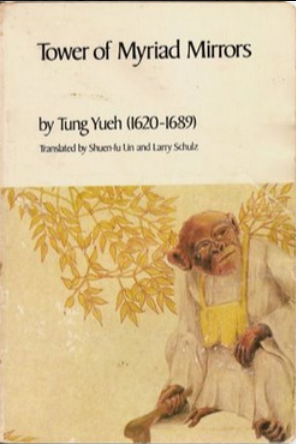
Author: Dong Yue (Tung Yüeh)
Translator: Shuen-Fu Lin / Larry Schulz
Publisher: Lancaster-Miller Publishers
Format: Hardback
Genre: Fiction
Date: 1978
Pages: 200 pages
Number of issues: 1
ISBN: 9780895815019
ASIN: 089581501X
Language: English
Adaptation: Addition
Summary:
China's most outrageous character--the magical Monkey who battles a hundred monsters--returns to the fray in this seventeenth-century sequel to the Buddhist novel Journey to the West. In The Tower of Myriad Mirrors, he defends his claim to enlightenment against a villain who induces hallucinations that take Monkey into the past, to heaven and hell, and even through a sex change. The villain turns out to be the personification of his own desires, aroused by his penetration of a female adversary's body in Journey to the West. In this, his only novel, author Tung Yueh (1620-1686), a monk and Confucian scholar, picks up the slapstick of the original tale and overlays it with Buddhist theory and bitter satire of the Ming government's capitulation to the Manchus. After a nod to Journey's storyteller format, Tung carries Monkey's quest into an evocation of shifting psychological states rarely found in premodern fiction. An important though relatively unknown link in the development of the Chinese novel and window into late Ming intellectual history, The Tower of Myriad Mirrors further rewards by being a wonderful read. About the Shuen-fu Lin is Professor of Chinese literature at the University of Michigan. Larry Schulz holds a Ph.D. in Chinese intellectual history from Princeton University and has published his dissertation, "Lai Chih-te and the Phenomenology of Change," and articles on traditional Chinese medicine. He is currently a senior officer at the Federal Reserve Bank of Atlanta.
Source: https://www.goodreads.com/book/show/134588437-tower-of-myriad-mirrors