Journey to the West (2001) 西游记
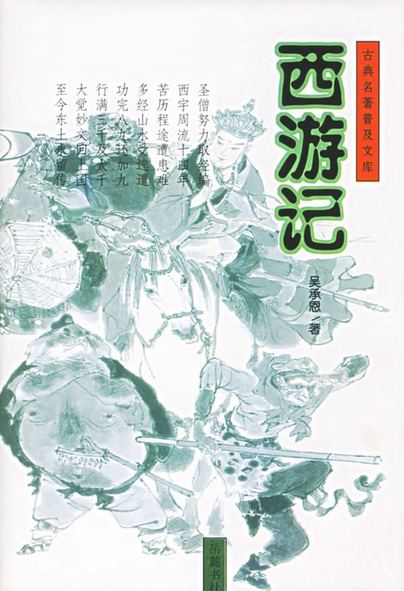
Author: Wu Cheng'en
Publisher: Yuelu Publishing House
Format: Hardcover
Date: September 2001
Pages: 688
Book Series: Popular Library of Classical Masterpieces
Number of issues: 36
ISBN: 9787806651070
Language: Chinese
Adaptation: Retelling
Summary:
Journey to the West originated in 16th-century China during the Jiajing reign (1522–1566) of the Ming Dynasty—more than four centuries ago. Its author, Wu Cheng'en (courtesy name Ruzhong, art name Sheyang Jushi), wrote the initial draft in his middle age and later refined it. He artistically reimagined the literary works and folktales regarding the Tang Monk's pilgrimage that had accumulated over generations, transforming a story originally centered on the monk into an epic saga of Sun Wukong—the Monkey King—battling against the heavens and the earth.
Sun Wukong is the most brilliant figure in the entire work. The episode "Havoc in Heaven" highlights his love for freedom and his spirit of defiance, while the "Journey to the West" demonstrates his resolve to eradicate evil completely wherever he encounters it. After his failed rebellion in Heaven and five centuries of imprisonment beneath the Mountain of Five Elements, he is released by the Tang Monk to join the pilgrimage. He is no longer merely a rebel; he has become a hero—wearing a magical tightening headband and a tiger-skin skirt—dedicated to ridding the mortal world of demonic afflictions. Tenacious resilience in the face of overwhelming odds and the ability to adapt swiftly to changing circumstances are the defining traits of Sun Wukong, the vanquisher of demons.
The fantastical world and mythological characters depicted in Journey to the West are largely rooted in real life, yet they embody—through their wondrous forms—certain cherished aspirations held by the author and the common people. The "Eighty-One Tribulations," the "Seventy-Two Transformations," and the supernatural powers of various deities and demons are all steeped in fantasy; the dazzling array of magical treasures was clearly imagined by people as a means to conquer nature or defeat enemies. Journey to the West thus exemplifies the fundamental artistic characteristics of Romanticism.
Journey to the West artfully blends good-natured mockery, biting satire, and stern criticism, making many of its chapters delightfully entertaining while effectively conveying profound themes and the author's distinct loves and hates. The forty-one episodes comprising the "eighty-one tribulations" unfold through the intricate relationships among monks, deities, Buddhas, and demons, with one crisis following another in rapid succession. These countless fantastical tales, filled with conflict, profoundly embody the optimistic spirit of the masses—their determination to resist malevolent forces and triumph over nature and adversity—while indirectly reflecting the social realities of the feudal era.
