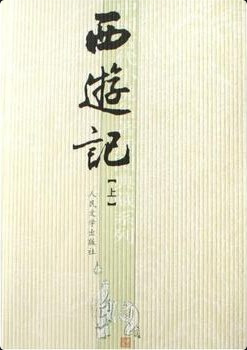
Author: Wu Cheng'en (Ming Dynasty)
Publisher: People's Literature Publishing House
Format: Paperback
Genre: Fantasy
Date: May 1980
Pages: 1162
Book Series: Illustrated Classic Collection of Ancient Chinese Fiction
Number of issues: 11
ISBN: 9787020051564
Language: Chinese
Adaptation: Retelling
Summary:
Journey to the West is presented in two volumes. Its stories are widely familiar—iconic episodes such as Sun Wukong (the Monkey King) wreaking havoc in Heaven, Zhu Bajie (Pigsy) taking a wife at Gao Village, the battle against the White Bone Demon, and the quest to obtain the Palm-Leaf Fan are known to virtually everyone, from adults to children. For centuries, the work’s compelling artistic charm has captivated generation after generation, establishing it as one of the most beloved classical masterpieces in China. At its core, Journey to the West recounts the tale of Sun Wukong protecting the monk Tang Seng (Tripitaka) on a pilgrimage to the West to retrieve Buddhist scriptures, a journey marked by eighty-one trials and tribulations. The pilgrimage itself is based on a historical event. Approximately 1,300 years ago—in the first year of the Zhenguan era (627 AD) during the reign of Emperor Taizong of the Tang Dynasty—a 25-year-old monk named Xuanzang departed from the capital, Chang'an, and set out alone for India (then known as Tianzhu) to study. Traveling through Central Asia, Afghanistan, and Pakistan, he overcame immense hardships and dangers before finally reaching India. He spent over two years there, earning acclaim for his role as a lead speaker at a major Buddhist scholastic debate. In the nineteenth year of the Zhenguan era (645 AD), Xuanzang returned to Chang'an, bringing back 657 Buddhist scriptures. His nineteen-year, multi-thousand-mile odyssey was a legendary expedition that caused a great sensation at the time. Later, Xuanzang recounted his experiences, which his disciple Bianji compiled into the twelve-volume Great Tang Records on the Western Regions (Da Tang Xiyu Ji). However, that work focuses primarily on the history, geography, and travel routes of the lands he visited, containing no narrative fiction. It was not until his disciples Huili and Yanzong wrote A Biography of the Tripitaka Master of the Great Ci'en Monastery of the Great Tang that many mythical elements were woven into the account of Xuanzang’s journey—and from that point on, the story of Tang Seng’s pilgrimage began to spread widely among the common people. Works such as the Southern Song dynasty’s Poetic Tale of Tripitaka of the Great Tang Fetching the Scriptures, the Jin dynasty yuanben (short theatrical sketches) Tripitaka and The Peach Banquet, as well as Yuan-dynasty zaju (operatic dramas)—including Wu Changling’s Tripitaka Fetches the Scriptures from the Western Heaven and the anonymous Erlang Shen Chains the Great Sage—all laid the foundation for the creation of Journey to the West. Building upon this body of folklore, huaben (vernacular stories), and traditional drama, Wu Cheng’en engaged in a painstaking process of creative transformation to produce this monumental literary masterpiece—a work that remains a source of great pride for the Chinese nation.
